Explore the Screams:

Homicidal (1961)
Director: William Castle
Actresses: Jean Arless, Patricia Breslin
Category: Coded Queerness
Themes: Gender Performance

Play Misty for Me (1971)
Director: Clint Eastwood
Actresses: Clarice Taylor, Jessica Walter
Category: Systemic White Supremacy
Themes: Racism, Mental Illness
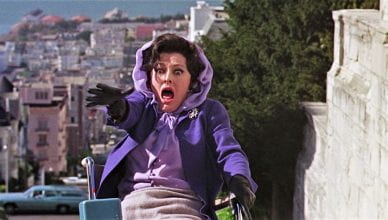
Eye of the Cat (1969)
Director: David Lowell Rich
Actress: Eleanor Parker
Category: Hagsploitation
Themes: Disability, Caregiving
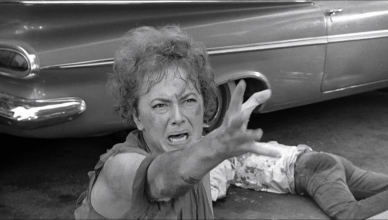
Lady in a Cage (1964)
Director: Walter Grauman
Actress: Olivia de Havilland
Category: Hagsploitation
Themes: Disability, Psychological Torture
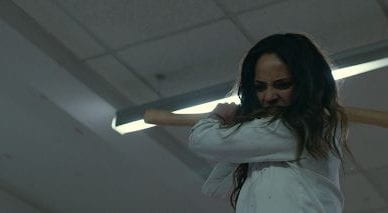
The Belko Experiment (2016)
Director: Greg McClean
Actress: Adria Arjona
Category: Sexual Harassment
Themes: Harassment, Silencing

AHS: Freak Show (2014)
Director: Anthony Hemingway
Actresses: Jyoti Amge, Jessica Lange
Category: Disability
Themes: Ethics of Museum Exhibition
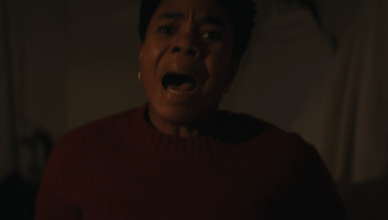
Master (2022)
Director: Mariama Diallo
Actresses: Regina Hall, Zoe Renee, Amber Gray
Category: Systemic White Supremacy
Themes: Racism, Academia
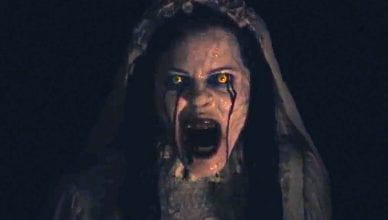
The Curse of La Llorona (2019)
Director: Michael Chaves
Actresses: Linda Cardellini, Marisol Ramirez
Category: Maternal Grief
Themes: Grief, Otherness
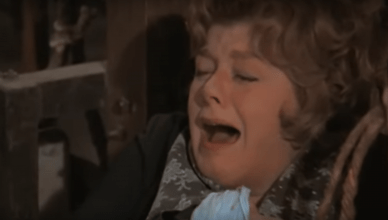
What’s the Matter with Helen (1971)
Director: Curtis Harrington
Actresses: Debbie Reynolds, Shelley Winters
Category: Hagsploitation
Themes: Grief, Mental Illness
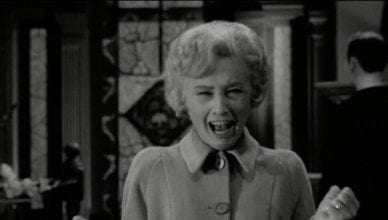
The Night Walker (1965)
Director: William Castle
Actress: Barbara Stanwyck
Category: Hagsploitation
Themes: Gaslighting, Psychological Torture

House of Wax (1953)
Director: Andre de Toth
Actresses: Phyllis Kirk, Carolyn Jones
Category: Disability
Themes: Ableism

The Spiral Staircase (1946)
Director: Robert Siodmak
Actresses: Dorothy McGuire, Ethel Barrymore
Category: Disability
Themes: Ableism, Eugenics

Better Watch Out (2016)
Director: Chris Peckover
Actresses: Olivia DeJonge, Virginia Madsen
Category: Trump Era Anger
Themes: Toxic Masculinity, Class Disparity
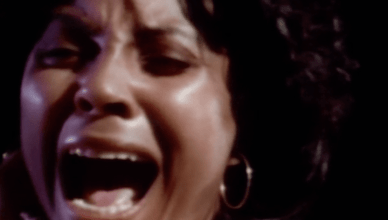
Poor Pretty Eddie (1975)
Directors: David Worth and Richard Robinson
Actresses: Leslie Uggams, Shelley Winters
Category: Systemic White Supremacy
Themes: Racism, Rape
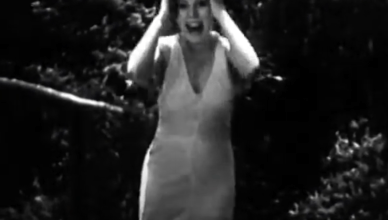
Chloe, Love Is Calling You (1934)
Director: Marshall Neilan
Actresses: Georgette Harvey, Olive Borden
Category: Systemic White Supremacy
Themes: Racism, Xenophobia

Antebellum (2020)
Directors: Gerard Bush and Christopher Renz
Actresses: Janelle Monáe, Jena Malone
Category: Systemic White Supremacy
Themes: The Institution of Slavery, Historical Memory

Who Slew Auntie Roo (1971)
Director: Curtis Harrington
Actress: Shelley Winters
Category: Maternal Grief
Themes: Grief, Psychotic Break
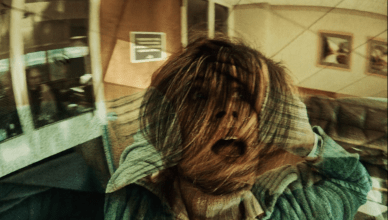
Unsane (2018)
Director: Steven Soderbergh
Actresses: Claire Foy, Juno Temple
Category: Stalking
Themes: Forced Confinement, Psychological Abuse, Attempted Rape
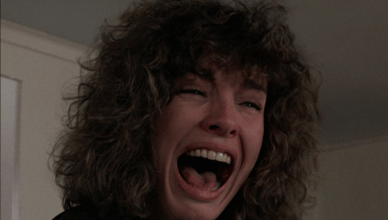
Fatal Attraction (1987)
Director: Adrian Lyne
Actresses: Glenn Close, Anne Archer
Category: Stalking
Themes: Adultery, Mental Illness

Beloved (1998)
Director: Jonathan Demme
Actresses: Oprah Winfrey, Thandiwe Newton
Category: Maternal Grief
Themes: The Institution of Slavery, Guilt
Ratter (2015)
Director: Branden Kramer
Actresses: Ashley Benson, Kalli Vernoff
Category: Stalking
Themes: Surveillance, Silence
Twin Peaks: The Return (2017)
Director: David Lynch
Actresses: Sheryl Lee, Grace Zabriskie
Category: Child Abuse
Themes: : Abuse, Recovered Memory, Family Trauma
Suddenly, Last Summer (1959)
Director: Joseph L. Mankiewicz
Actress: Elizabeth Taylor
Category: Coded Queerness
Themes: Queer Monsters, Sexual Perversion

The Purge TV Series: Season 1 (2018)
Creator: James DeMonaco
Actress: Amanda Warren
Category: Sexual Harassment
Themes: Harassment, Racism
Whatever Happened to Baby Jane (1962)
Director: Robert Aldrich
Actresses: Bette Davis, Joan Crawford
Category: Hagsploitation
Themes: Disability, Caregiving, Mental Illness
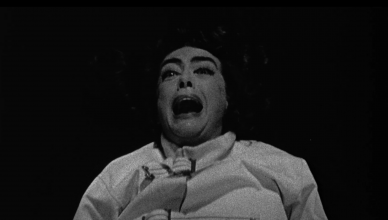
Strait-Jacket (1964)
Director: William Castle
Actresses: Joan Crawford, Diane Baker
Category: Hagsploitation
Themes: Intergenerational Trauma, Mental Illness
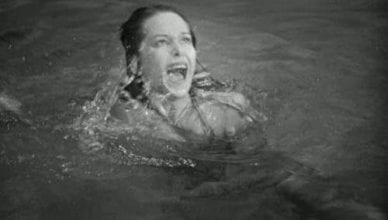
Cat People (1942)
Director: Jacques Tourneur
Actresses: Simone Simon, Jane Randolph
Category: Coded Queerness
Themes: Queer Monsters, Otherness
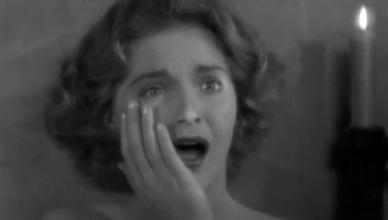
Dracula’s Daughter (1936)
Director: Lambert Hillyer
Actress: Nan Grey
Category: Coded Queerness
Themes: Queer Monsters, Vampires
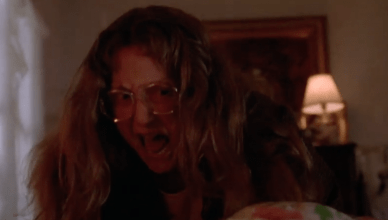
Office Killer (1997)
Director: Cindy Sherman
Actresses: Carol Kane, Molly Ringwald
Category: Sexual Harassment
Themes: Harassments, Microaggressions, Trauma
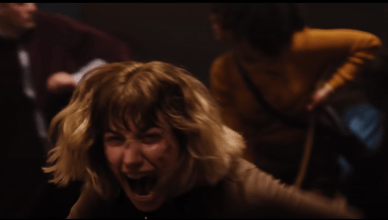
Black Christmas (2019)
Director: Sophia Takal
Actress: Imogene Poots, Aleyse Shannon, Lucy Currey
Category: Trump Era Anger
Themes: Sexual Violence, Misogyny, Women in Peril

Ready or Not (2019)
Directors: Matt Bettinelli-Olpin, Tyler Gillett
Actress: Samara Weaving
Category: Trump Era Anger
Themes: Class Disparity, Gender Performance
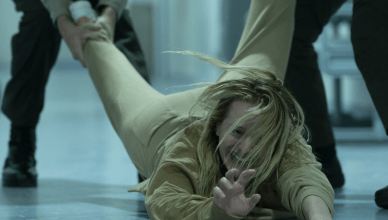
The Invisible Man (2020)
Director: Leigh Whannell
Actress: Elisabeth Moss
Category: Trump Era Anger
Themes: Domestic Abuse, Women in Peril
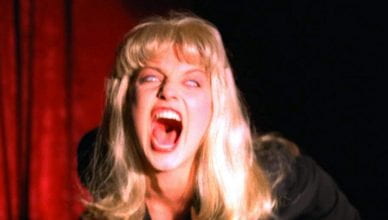
Twin Peaks: Season 1 (1990-1991)
Director: David Lynch
Actresses: Sheryl Lee, Grace Zabriskie
Category: Child Abuse
Themes: : Abuse, Recovered Memory, Family Trauma
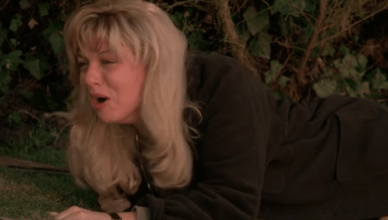
Fire Walk with Me (1992)
Director: David Lynch
Actress: Sheryl Lee
Category: Child Abuse
Themes: : Abuse, Recovered Memory, Family Trauma
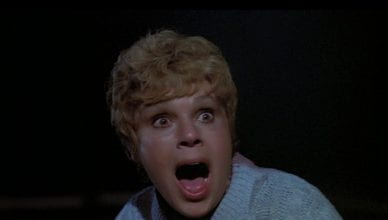
Friday the 13th (1980)
Director: Sean S. Cunningham
Actresses: Betsy Palmer, Robbi Morgan
Category: Maternal Grief
Themes: Grief, Psychotic Break

Hereditary (2018)
Director: Ari Aster
Actress: Toni Collette
Category: Maternal Grief
Themes: Grief, Family Trauma, Hysterical Women
American popular culture has never been especially kind to women over forty. Sometimes written as crotchety misanthropes, other times cast as eccentric comic relief, perimenopausal and postmenopausal women rarely fare well on screen. This is particularly true in the horror genre where the word hag conjures up some very specific images usually involving a grotesque older woman attempting to suck the youth out of some unfortunate ingénue. Although this sub-genre is known by several names, including hagsploitation, hag horror, psycho-biddy horror and Grande Dame Guignol, the films it describes all follow the same template: an aging woman, often financially independent and who vacillates between hysterical and batshit crazy, is either the victim of or the perpetrator of gaslighting (Pahle). Frequently starring an aging movie actress who has not previously been known for horror films and whose body of work is extensive enough to ensure that audiences are able to delineate between her younger self and her older self-presentations, hagsploitation is a subgenre almost entirely predicated upon associating aging with the grotesque.
While hagsploitation examples can be found across the decades, their main era of popularity was the 1960s and 1970s, not uncoincidentally a time of great upheaval for women on the domestic front (Billson). Whatever Happened to Baby Jane, Robert Aldrich’s ode to an aging movie star and her paraplegic sister, debuted in October 1962 and is typically considered the first official hagsploitation film. Four months later, Betty Friedan’s groundbreaking book, The Feminine Mystique, was released and I would argue that both of these events tap into a cultural mood that contributed to the second wave of American feminism. A journalist who was fired after revealing she was pregnant with her second child, Friedan set about interviewing her former classmates in anticipation of their 15th college reunion. These interviews revealed the quiet frustrations of women who traded in their professional ambitions to become housewives and mothers. A year before, in 1961, President John F. Kennedy convened the President’s Commission on the Status of Women which looked at the ways legal inequality impacted women, particularly in the workplace (Cochrane). Kennedy also challenged the status-quo thinking that women’s value to society was limited to the home front and raising children. It was this same questioning of opportunities for women outside of the home that led Friedan to write about a sense of malaise she saw reflected in her life and the lives of her Smith College classmates when they discovered that, despite their stellar education, professional opportunities simply did not exist. Like these contemporaneous cultural events, hagsploitation pushes back against simply framing women as wives and mothers. Critics suggest hagsploitation is a cautionary tale of the madness that can befall a woman who is not grounded in home and family (Mortimer 156), but I contend that these films are actually subversive warnings of what happens when women don’t support other women. By imbuing youth with a specific type of cultural capital inaccessible to women over thirty, hagsploitation screams are a recognition of this chasm and the institutional forces invested in perpetuating it.

Hagsploitation screams code possibility for younger women living in the margins and looking for alternate ways of being. This is particularly important in our current cultural moment in which the act of natural aging is increasingly not the norm. Between Gen Z “voicing acute distress” regarding aging and Gen Alpha becoming the financial driver of sales in the skincare industry, social norms associated with aging have shifted dramatically (Holtermann; Cheong). Hags represent an alternate view on aging in which a woman’s power is not derived from the physical. Indeed, in many cases, Hags are only able to access their full autonomy once they have been divested from a sexualized gaze. Through their force, these screams counter notions of frailty stemming from physical presentation which typically are associated with age. They signal to younger women that without generational unity to support women stepping outside of prescribed roles, both physically and behaviorally, the Hags' fate will one day be their own.
On the surface, age and gender conspire in these films to position women who are middle aged and older as villains. Unlike other film genres that cast (equally problematically) postmenopausal women as founts of knowledge or eccentric foils, horror almost exclusively renders women of this age group as monstrous (Richards 119). From age-related disability in The Nanny (1965) to equating spinsterhood with mental illness in Misery (1990) to casting postmenopausal sexuality as abnormal in Ruby (1977), hagsploitation horror is rife with examples of aging women cast as threatening simply because they challenge cultural expectations about what it means to exist in the world as an older woman. In his exploration of the history of hagsploitation, Peter Shelley contends that these roles embody the “Woman in Peril” trope because they hinge on women being made vulnerable due to age (8). Sometimes this is the result of the natural decaying process that is part of aging, but other times it is the result of women having dared to live an unconventional life.
In the world of hagsploitation, women are expected to be wives and mothers – and those who intentionally eschew those roles cast as a threat (Young 3). This threat then magnifies depending on the woman’s age. As nothing disturbs the culture more than examples of people who are able to carve out lives living in opposition to societal norms, older women who have chosen not to enter into traditional marriage and mothering roles are viewed as dangerous. Pre-menopause, their age provides them enough of a history living in defiance of cultural pressures to demonstrate to younger women that such paths are possible. Post-menopause, their bodies become sites of defiance. Erin Harrington, whose excellent Women, Monstrosity and Horror Film: Gynaehorror explores female reproduction in horror films, explains how entering menopause positions women at the margins of cultural norms that are almost entirely predicated upon production:
The barren body refuses to ‘behave’ in a culturally-sanctioned manner, or to sit within the social categories that are made available to and that therefore construct the female body. The barren body, as a type of specifically female body, both signifies the potential capacity and refusal to reproduce. (234)
 By violating cultural expectations of reproduction, the hags in hagsploitation operate from the margins. Women who defy the roles of wife, mother, and (re)producer simultaneously reflect and challenge our expectations of aging by offering an alternative way of being that directly challenges the status quo (Sharry and McVittie 80). And while it is certainly true that these films explore “anxieties about aging in an increasingly youth-focused postwar culture,” I contend there is another narrative unfolding in hagsploitation films parallel to these readings (79).
Stephen King’s argument that horror is “innately conservative, even reactionary” explains the positioning of older women in hagsploitation as monstrous and needing to be expunged, but only if you are reading these films from the perspective of a 1960s and 1970s dominant culture frightened by women’s growing political power and independence (390). I argue that the screams emitted in the hagsploitation films Whatever Happened to Baby Jane, Strait-Jacket (1964), Lady in a Cage (1964), The Night Walker (1965), Eye of the Cat (1969), and What’s the Matter with Helen (1971) carve out a space for older women that negates ageism’s cultural erasure by forcing audience engagement with their marginality; those screams also echo second-wave feminism’s concerns over aging, caregiving roles, threats of physical violence, income insecurity, and incarceration. Though reacting to different pressures stemming from societal norms, all of these screams quite literally give voice to women living in opposition to gendered expectations.
Billson, Anne. “‘Hagsploitation’: horror’s obsession with older women returns.” The Guardian, 18 Jan. 2018.
Cheong, Charissa. "Gen Alpha Seems Obsessed with Expensive Skincare – and Millennial Parents are Getting the Blame." Business Insider, 10 Jan. 2024.
Cochrane, Kira. "1963: The Beginning of the Feminist Movement." The Guardian, 7 May 2013.
Harrington, Erin Jean. Women, Monstrosity and Horror Film: Gynaehorror. Routledge, 2019.
Holtermann, Callie. "Why Does Gen Z Believe It’s ‘Aging Like Milk’?" New York Times (Online), 23 Jan. 2024.
King, Stephen. "The Horror Movie as Junk Food." Playboy, January 1982, pp. 120-122.
Mortimer, Claire. Spinsters, Widows and Chars: The Ageing Woman in British Film. Edinburgh University Press, 2021.
Pahle, Rebecca. "A Primer for the Unexpectedly Awesome Hagsploitation Horror Subgenre." SYFY Wire, 13 Nov. 2019.
Richards, Jennifer. "“Mirror, mirror on the wall, who is the ugliest of them all?” The Elderly as “Other” in Countess Dracula." Elder Horror: Essays on Film's Frightening Images of Aging, edited by Cynthia J. Miller and A. Bowdoin Van Riper, McFarland, 2019, pp. 119-128.
Shary, Timothy, and Nancy McVittie. Fade to Gray: Aging in American Cinema. University of Texas Press, 2021.
Shelley, Peter. Grande Dame Guignol Cinema: A History of Hag Horror from Baby Jane to Mother. McFarland & Co., 2009.
Singer, George HS, David E. Biegel, and Brandy L. Ethridge. "Toward a Cross Disability View of Family Support for Caregiving Families." Journal of Family Social Work vol. 12, no. 2, 2009, pp. 97-118.
Young, Caroline. Crazy Old Ladies: The Story of Hag Horror. BearManor Media, 2022.
Eye of the Cat (1969)
Director: David Lowell Rich
Actress: Eleanor Parker
Category: Hagsploitation
Themes: Disability, Caregiving
Lady in a Cage (1964)
Director: Walter Grauman
Actress: Olivia de Havilland
Category: Hagsploitation
Themes: Disability, Psychological Torture
What’s the Matter with Helen (1971)
Director: Curtis Harrington
Actresses: Debbie Reynolds, Shelley Winters
Category: Hagsploitation
Themes: Grief, Mental Illness
The Night Walker (1965)
Director: William Castle
Actress: Barbara Stanwyck
Category: Hagsploitation
Themes: Gaslighting, Psychological Torture
Whatever Happened to Baby Jane (1962)
Director: Robert Aldrich
Actresses: Bette Davis, Joan Crawford
Category: Hagsploitation
Themes: Disability, Caregiving, Mental Illness
Strait-Jacket (1964)
Director: William Castle
Actresses: Joan Crawford, Diane Baker
Category: Hagsploitation
Themes: Intergenerational Trauma, Mental Illness



 Trump was especially prone to making misogynistic comments about women. In October 2016, for example, an Access TV video surfaced of a 2005 conversation in which Trump joked about sexually assaulting women (Prasad). While he dismissed the incident as “locker room talk,” his behavior on the campaign trail – including criticizing female reporters for not adopting a feminine style of dress, calling women he disagreed with politically “fat pigs,” distributing campaign buttons that said “Trump that bitch” in reference to opponent former Senator and Secretary of State Hillary Clinton, and being accused of sexual violence by multiple women – suggested a disturbing pattern of behavior (see Elsesser; Filipovic; Levine and El-Faizy; Matthews; Time Staff). Backlash from feminist circles was swift and pointed with some groups adopting Trump slurs as their rallying cry, such as his criticism of Democratic Presidential nominee Hillary Clinton as a “Nasty Woman.” This verbal sparring between the candidates and their supporters signaled that the culture war – meaning those conflicts stemming from value- and moral-based judgments like abortion and immigration policy – was alive and well. When the dust of the election settled, Trump was declared the winner, and the country was left to grapple with its obvious political divide.
 Within this pantheon of politics, auditory expressions of dissatisfaction have a long history. Frequently deployed in marches, sit-ins and picket lines, chants express community dissatisfaction and are designed to bring awareness to a particular topic. Often a clever play on words meant to be “short, percussive, and meaningful,” chants represent a somewhat intellectualized protest response (Anderson). Conversely, while screams are also about disruption, they transmit an explicitly guttural reaction to events and typically emerge with no pre-planning by the scream’s performer. From Lia McGeever screaming during a San Francisco Board of Supervisors meeting as a “nonverbal expression of pain” in recognition of the treatment of trans people (Morris) to Jess, a protester at the 2017 inauguration who described her scream as a response to “that wellspring of agony of the millennia of people being wronged and nobody being there to say no or them saying no and nobody listening” and who instantly found her turmoil treated as a meme (Sivertson et al.), screams in public spaces are sometimes the only expression of agency a disenfranchised person can access. Horror films are the perfect vehicle by which to dissect what it means to be a woman in Trump-era America because the cornerstone trope of the genre– the screaming woman–reflects this history of protest by resisting the silence inherent in misogyny.


 Like other forms of popular culture, horror is rife with examples of mothers who are framed through their innate need to protect and defend their children displaying what Erin Harrington calls a “spectacle of female ferocity” and a willingness “to sacrifice their own lives to save or seek vengeance for their children” (198). Chris in The Exorcist (1973), Karen in Child’s Play (1988), and Rachel in The Ring (2002) are all examples of mothers pushed to violence to protect their children but who never move into the position of monster. They reflect a standard of motherhood that “valorises self-sacrifice, selflessness and nurturance” and that equates those traits with being a “good” mother (Arnold 37). Conversely, other mothers, such as Ruth in The Girl Next Door (2007) The Mother in Barbarian (2022), and Ellie from Evil Dead Rise (2023) violate audience expectations by engaging in extreme non-normative behaviors that explicitly privilege their needs above those of their children. Their violence and absolute disregard for the well-being of their children moves them firmly into traditional spaces of monstrosity. But what of those mothers who exist at the edges of the “good” and “bad” mother binary?
 Maternal loss separates a woman not only from her child but from other mothers whose children are still alive. When the death of an infant is not validated, the repercussions for the mother can be extremely isolating (Cline 167). Both her loss and the lack of community support create an additional layer of Otherness for a mourning mother that renders her suffering taboo. Drawing upon the work of French feminist Élisabeth Badinter, Sady Doyle notes that maternal instinct is socially constructed and that expressions of grief historically reflect these non-fixed definitions noting that infant deaths could be met “with wrenching grief or shrugged off” depending upon cultural norms (170). Certainly, horror interacts with both of these reactions, but it is the “wrenching grief” response transmitted through a scream that is our point of interest. Because it is overtly demonstrative, wrenching grief cannot be ignored. It is a performance that drags personal pain into the public sphere and forces those in proximity to engage with it, however uncomfortably. I argue that the screams released by a grieving mother are an acknowledgement of a liminal state of abjection and a direct renunciation of the silence that surrounds maternal loss.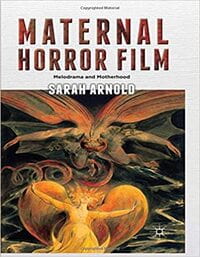


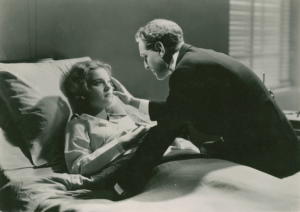 Frequently only developed in relation to a narrative’s heteronormative characters, queer villains have a legacy of existing solely to fortify gender and sexual binaries (Vallese 3). And yet, these characterizations have also offered queer moviegoers an opportunity to imagine identities beyond a rigid set of cultural norms that see gender as fixed and only in relation to physical/sexual presentation. As Heather O. Petrocelli notes in Queer for Fear: Horror Film and the Queer Spectator, queer spectatorship enables a reading of villainy beyond the obvious: “queers feel seen by horror because they recognize a kind of kinship between the trauma shown in horror films and their embodied queer traumas, as both societal victim and monster” (132).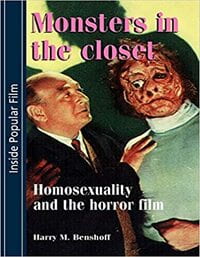

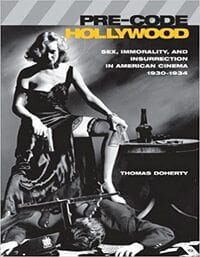


 Conceptually and legally, the definition of what constitutes sexual harassment has historically been somewhat nebulous. Prior to the enactment of the Civil Rights Act of 1964, there weren’t significant federal legal options one could pursue to address sex-based quid pro quo expectations within the workplace. But that would soon change with the establishment of the Equal Employment Opportunity Commission (EEOC) under Title VII of this act. It was the EEOC’s opinion that Title VII provided legal protections from sexual harassment within the workplace, and while their power initially was only investigative, their broader interpretation of Title VII was foundational in providing women with legal recourse (Khaing 330). The mechanisms prescribed by Title VII were further strengthened by the Civil Rights Act of 1991 which mandated that “employers may be liable for compensatory and punitive damages up to $300,000 per plaintiff, depending upon the size of the employer’s workforce” in cases in which sexual discrimination was found to have occurred (Mead 813).
 Both the reticence to report and the consequences that can stem from reporting are also significantly framed by film and television. When these narratives play the experience of harassment for laughs, it contributes to a culture that makes light of these types of abuses which, in turn, impacts how safe victims feel to report abuses. In 9 to 5 (1980), Doralee Rhodes (Dolly Parton) repeatedly fends off the unwanted sexual overtures of her misogynistic boss. In Legally Blonde (2001), Elle Woods (Reese Witherspoon) finds her position working on a legal case threatened when she resists her professor’s advances and reports him. In The Devil Wears Prada (2006), Emily (Emily Blunt) is encouraged to engage in dangerous dieting rituals in order to meet the expectations of appearance (steeped in gendered notions of beauty) set forth by her tyrannical boss. In all of these instances, the seriousness of the abuse is undercut by humor to the extent that toxic workplace behaviors are trivialized and then normalized (MacKinnon 52). When films treat the issue with the gravitas it deserves but also compromise the agency of victims in other ways, it suggests that one person’s story is never of sufficient importance. In Fun and Games (1980), Carol’s (Valerie Harper) attempt to receive legal justice for the retaliatory treatment she experiences from her boss is presented in service to Pete’s (Cliff De Young) awakening to the injustices of sexism. In Stalking Laura (1993), Laura’s complaints to management about the unwanted attentions of a senior colleague detours into extremism when her harasser opens fire at corporate headquarters. In all of these iterations, silence – structural and personal – permeate the narrative and frame the experiences of women who are being harassed. Here, the genre conventions of the horror film – specifically the act of screaming- opens up opportunities for women to dismantle these silencing norms and reclaim agency in professional spaces.


 A vocal countering of the historical silence surrounding the Black experience in the United States, horror film screams that engage with anti-Blackness have a legacy of both solidifying and challenging dominant culture norms wherein “[w]hiteness, masculinity, and heterosexuality function as transparent norms, in contrast to identities ‘marked’ as black, female, or homosexual” (Smith 28). The reverberations of anti-Blackness especially, are prominent in the cultural landscape with “manifestations of anti-Black racism (e.g., Jim Crow, redlining, mass incarceration, organizational discrimination) … [contributing] to current disparities in the health, education, and economic status of Black people in the USA” (King et al. 145). Consequently, combating these cultural norms that reinforce white supremacy requires adding voice where there have been historical silences, an advocacy horror films have not always been prepared to perform.
 The 1960s and 1970s represented a sea change of sorts in which more and more films brought racial representation to the fore, allowing Black characters to assert agency, challenge anti-Blackness and push back against historical silencing practices. Some films, like Night of the Living Dead (1968), were subtle in their approach. While the film centers a Black man as its hero, Ben’s race is never mentioned signaling “a certain boundary of frankness and conventionality regarding racial representation that Night does not cross” (Lowenstein 162). Other films overtly challenged notions of racism, particularly those tied to masculinity. This was especially true of Blaxploitation films such as Blacula (1972), Ganja & Hess (1973) and Abby (1974) in which Black masculinity was celebrated and depicted as desirable. In her highly influential work Horror Noire: Blacks in American Horror Films from the 1890s to Present, Robin Means Coleman writes about the importance of Blaxploitation films in grappling with the genre’s depictions of race noting that “[t]he films were emboldened by Black Power ideologies—a range of belief systems espousing an awakening of Black pride, self-sufficiency, and empowerment which were prominent during the decade” (119).
 Historically, what constitutes stalking has proven difficult to pin down. Referred to as an “old behavior, but a new crime,” the term only entered the national lexicon in the 1990s after a series of high-profile incidents involving celebrities (Meloy xix). Without one concrete, agreed upon definition, stalking is usually conceived of as representing a series of behaviors. Typically, the behavior can be broken down into two categories. Traditional stalking involves acts such as following or watching, harassing, showing up uninvited and entering a home or car without invitation, while stalking with technology includes acts such as sending unwanted phone calls or text messages, monitoring social media activity, spying through the use of technology and tracking locations with electronic devices or applications (Morgan and Truman). While the United States Department of Justice defines stalking as “engaging in a course of conduct directed at a specific person that would cause a reasonable person to fear for his or her safety or the safety of others or suffer substantial emotional distress,” what constitutes “reasonable” varies wildly (Alicke and Weigel 130) The gender of the complainant, especially, can influence how certain behaviors are interpreted. One study found that in a “prototypical female victim/male defendant case,” men issued far fewer guilty verdicts than did women and had a more negative view of the victim (Dunlap et al. 414). Without one “operationalizing… definition of stalking,” news reports and popular culture have been left to mold the public’s understanding of what stalking looks like, resulting in the crime remaining amorphous in the minds of many (Quinn-Evans et al. 6980).
 Far less frequent are horror films in which women stalk men. In these stories, men are depicted as being more readily believed. Certainly, the “woman scorned” archetype is a factor here since the idea of a woman responding excessively emotionally plays into culturally ingrained ideas about gender and behavior. Female stalkers are mostly depicted as being angry that a romantic relationship has ended, and so her rage is depicted through the prism of interpersonal disappointment rather than institutional injustice. Beyond that, the type of overtly, physically-threatening stalking presented in these scenarios are informed by “masculine ideologies” (Schultz et al. 9). In other words, the behavior of the stalking stems from patriarchal ideas of gender difference whether the perpetrator is male or female. This is not meant to suggest that the experience of being stalked is any less for men than it is for women but to underscore how significantly gender expectations play out in these films.
 When then Speaker of the House Nancy Pelosi ascended to the podium to give a policy speech to a group of Progressive constitutes on June 8, 2010, no one could have predicted that the event would descend into chaos as disability rights activists took Pelosi to task for not doing more to advance passage of The Community Care Act, a policy that “would give those eligible for nursing home care the choice of in-home, community-assisted support” (Condon). For the protesters, this legislation represented a move toward agency and autonomy and away from a system of institutionalization. But Pelosi’s admonishment to the protesters that, “I am going to make my speech over your voices” became a powerful example of the systemic silencing experienced by people with disabilities and the ways that power contributes to that experience (Rucker). Beyond that, the exchange demonstrates that even a cacophony of voices is not always enough to combat pervasive invisibility. Certainly, this has frequently been the case with cinema, particularly horror films.
 By the early 1960s, however, horror began to delve more into the interiority of characters such that physical difference as a signpost for monstrosity started to dissipate. Genre films began to leverage disability not as coding for evil but for implied morality in contrast to the monster. But this equally problematic switch toward framing disability as power/valorization still functioned to Other people with disabilities. The two disabilities most commonly foregrounded in this shift, deafness and blindness, are still physical disabilities but are not always mapped on the body in obvious ways. For instance,