International Research Ethical Decision-Making Case 1
Sept 3, 2019
Our first case follows a team of ten researchers traveling to Lethoso, a developing country enveloped by South Africa, to conduct research on pathogens in water. Grace, Chris, Naakesh, and I were tasked with a seven-step process to determine if the research was ethical to conduct or not.
First, my team determined the facts of the situation to get to the root of the ethical issue. We know:
- 10 academic researchers traveling to Lethoso for 2 weeks
- water testing is done by researchers but requires local assistance
- publications expected from those researchers
- community members are not being paid for information
- pathogen present in the water specific to that area
- multiple places to get water sources
- multiple methods of water collection/storage
- research is to identify a solution
- similar research conducted in 2011
- Hydrogeologic information on Lethoso.

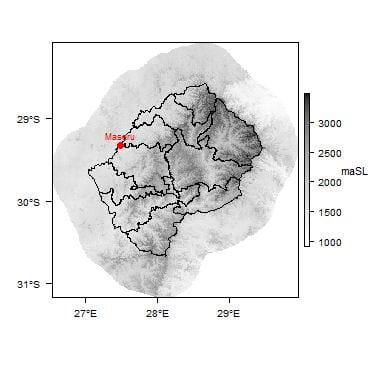
Credit: Earthwise BGS We determined that the key ethical issue in conducting this research is not paying the community members for the information on water sources they provide. Further, while the research team plans to provide a solution, this is far in the future. As long as the study ensures informed consent and does not place a disproportionate burden on the community members, it would be ethical. It would be unethical to not compensate community members for their time or keep the process of payment unclear. It would also be unethical if no action was taken to analyze the data after the trip.
Our second step was to identify the stakeholders in this ethical decision-making situation. We determined the following stakeholders:
- the community members
- the government of Lethoso
- the researchers
- the research funders
- the potential publishers
- the solution preparers
- the health providers
Our third step was to assess the motivations of each stakeholder. The community members are invested in their water supply and want to drink clean water. They may also want to work with foreigners or get involved in government work for the prestige. They may also be motivated by altruism.
The government of Lethoso (national, district, etc) has a vested interest in public safety and decreasing the prevalence of waterborne illness. This will keep their population healthy and gain public support in future elections. Lethoso officials also export a large portion of their good water to South Africa and are left with lower-quality supplies for their citizens and have a stake in finding solutions to purify water.
The researchers are motivated by a desire to build their CV with peer-reviewed research and hopefully to improve the quality of life in Lethoso. They may be motivated by a sense of adventure or thrill-seeking mentality to travel to a remote part of the world. They may also have interest in poverty alleviation.
The research funders (grant organizations, universities) want to see a return on investment. They are looking for a solution when the team of researchers returns and expects good quality data. This will allow them to function and keep drawing money out of whatever pots they draw from. Funders also have more pressure to reduce overheads and focus on results. The last thing that non-profits wants are to be accused of embezzlement or corruption.
The potential publishers are looking for quality data that can pass peer review and contribute something valuable to the scientific literature.
the solution preparers, or the people who have vested interest in the data being good so they can prepare a solution, might be the same as the researchers. They may also be siloed in another organization or not yet recruited. Their main motivation is to deliver an effective solution to total coliforms and E-Coli present in water supplies and eventually scale that technology beyond Lethoso.
Any health providers in Lethoso treating waterborne illness, especially on the pediatric side, are invested from a public health perspective so fewer people are suffering from diarrhea or cholera.
Now, we formulated three alternative solutions to this ethical problem in (step four).
We first identified a utilitarian solution and split it into a long vs short term approach. The long term utilitarian approach would be to conduct the research and pay community according to market rates for a day’s labor. The short term utilitarian approach would be to contract a government water truck and trade those supplies with people when they have already gone to collect their water, but this would lead to a small sampling error. We chose to focus on the long term approach of paying the community members. The pros of this approach are that the research will be finished efficiently, but the cons are if you get nothing you wasted resources. Paying the community members would also be tapping into a limited budget for two weeks of travel.
Our next solution was duty-based, where we do not pay the community members. This approach was alluded to in the description, where they should be invested in the outcomes enough to volunteer their time. The pros of this approach would be that no pay-for-knowledge culture would be fostered in Lethoso. We saw a strong example of how this can do damage when interacting with the Sierra Leonean healthcare system when every nurse would expect to be compensated for an interview. The cons of this approach are that it may overlook the Belmont report’s mandate of justice or fair distribution of burdens and benefits.
Our third solution was virtue-based where the researchers collect the water themselves or do not conduct the research. The pros of this approach are that no community labor is needed and the researchers could use more quantitative tactics such as cluster stratified sampling. However, the cons are that the researchers may be seen as intrusive in the community and trespassing and there is no guarantee that the researchers would find usable water sources. This would also be an inefficient way because the community members have geographical knowledge so it would take more time, expending more grant resources.
For step five we drew on our experiences in Sierra Leone and Nicaragua. Khanjan said he would pick several members and pay them the “market price”, which is similar to what the Ukweli team did in Sierra Leone this summer. We also thought about the engineering code of ethics where “do no harm” is the most important. I have personal experience collecting water samples in Nicaragua and all those who helped us were compensated with food (or money, if they were a driver).
We determined that the best course of action (step six) is to pay community members for their time and selecting members via conversations with community leaders. The researchers would select people who collect water often and for various reasons (drinking, food, washing) and present them with a day rate and the purpose of the research. The researchers would also tell these members what they are testing for. The researchers would use their own cars to drive back and forth from a home base in the community and various water sources. This utilitarian approach will yield the best quality data in the shortest amount of time. So, should they conduct the research? Yes.
The implications of our solution (step seven) are the selection process, budgeting, and data collection preparation. The selection process of who helps with the surveying will also be determining who is and isn’t paid so that must be decided with input from community leaders. There will be little implications on the venture’s technology aspects because the tests remain the same. There will be an economic impact on the venture since this is an added cost but it is worth the quality of data and relationship with the community. There may be unfavorable social implications when paying certain members. For example, it may cause a dispute if a wife comes home with cash that was given to her by foreigners. There will be a minimal environmental impact because the researchers will be using cars on the ground.
p.s.
We also made up a company in this process and will pitch the business model later. For now, we have a name: HOPATWWF (helping out people around the world with fluoride). Stay tuned for that pitch.