
Saladin Ambar is the Department Chair and an Associate Professor in the Department of Political Science at Lehigh University. His research recently took him to Germany to track the work of William James and W.E.B. Du Bois
On May 22nd I arrived in Berlin, Germany to begin research funded by a Lehigh Faculty Innovation Grant. I was there to investigate the influence of German education on the thinking and political thought of both Harvard University’s William James, and his then student, W.E.B. Du Bois, the first African American to graduate from that institution with a PhD. In addition to seeking out the archives at Humboldt University (formerly the University of Berlin), I was also asked to present my research to a group of graduate students at the University of Potsdam. At the invitation of Professor Logi Gunnarsson, an expert on James’s work, I was able to share the influence of James’s teaching on the young Du Bois, as we navigated James’s 1890 text “The Hidden Self.” The dialogue and feedback was wonderful. And I made an invaluable friend and colleague in Logi. We often forget how influential German intellectuals were in shaping the American academy. James and Du Bois were no different. It was truly exciting to be in this formerly divided city, thinking about race, the subconscious mind, and double consciousness, all with young men and women eager to complete their own graduate education and share their perspectives on a topic that clearly crosses the Atlantic in terms of importance. I look forward to returning to Cambridge to learn more about James and Du Bois at Harvard – but also one day to Berlin – and to Potsdam – to revisit the same field of study that so shaped these two critical thinkers in American race and psychology.
a PhD. In addition to seeking out the archives at Humboldt University (formerly the University of Berlin), I was also asked to present my research to a group of graduate students at the University of Potsdam. At the invitation of Professor Logi Gunnarsson, an expert on James’s work, I was able to share the influence of James’s teaching on the young Du Bois, as we navigated James’s 1890 text “The Hidden Self.” The dialogue and feedback was wonderful. And I made an invaluable friend and colleague in Logi. We often forget how influential German intellectuals were in shaping the American academy. James and Du Bois were no different. It was truly exciting to be in this formerly divided city, thinking about race, the subconscious mind, and double consciousness, all with young men and women eager to complete their own graduate education and share their perspectives on a topic that clearly crosses the Atlantic in terms of importance. I look forward to returning to Cambridge to learn more about James and Du Bois at Harvard – but also one day to Berlin – and to Potsdam – to revisit the same field of study that so shaped these two critical thinkers in American race and psychology.






 large marble lions, and into the darkly paneled library to unearth old texts. The new British Library, situated several blocks away from the British Museum, opened in 1998. It exudes a beauty and light appropriate for this invaluable collection of 150 million items, including manuscripts, maps, newspapers, magazines, prints, drawings, musical scores, patents, sound recordings, stamps, and, of course, books. As the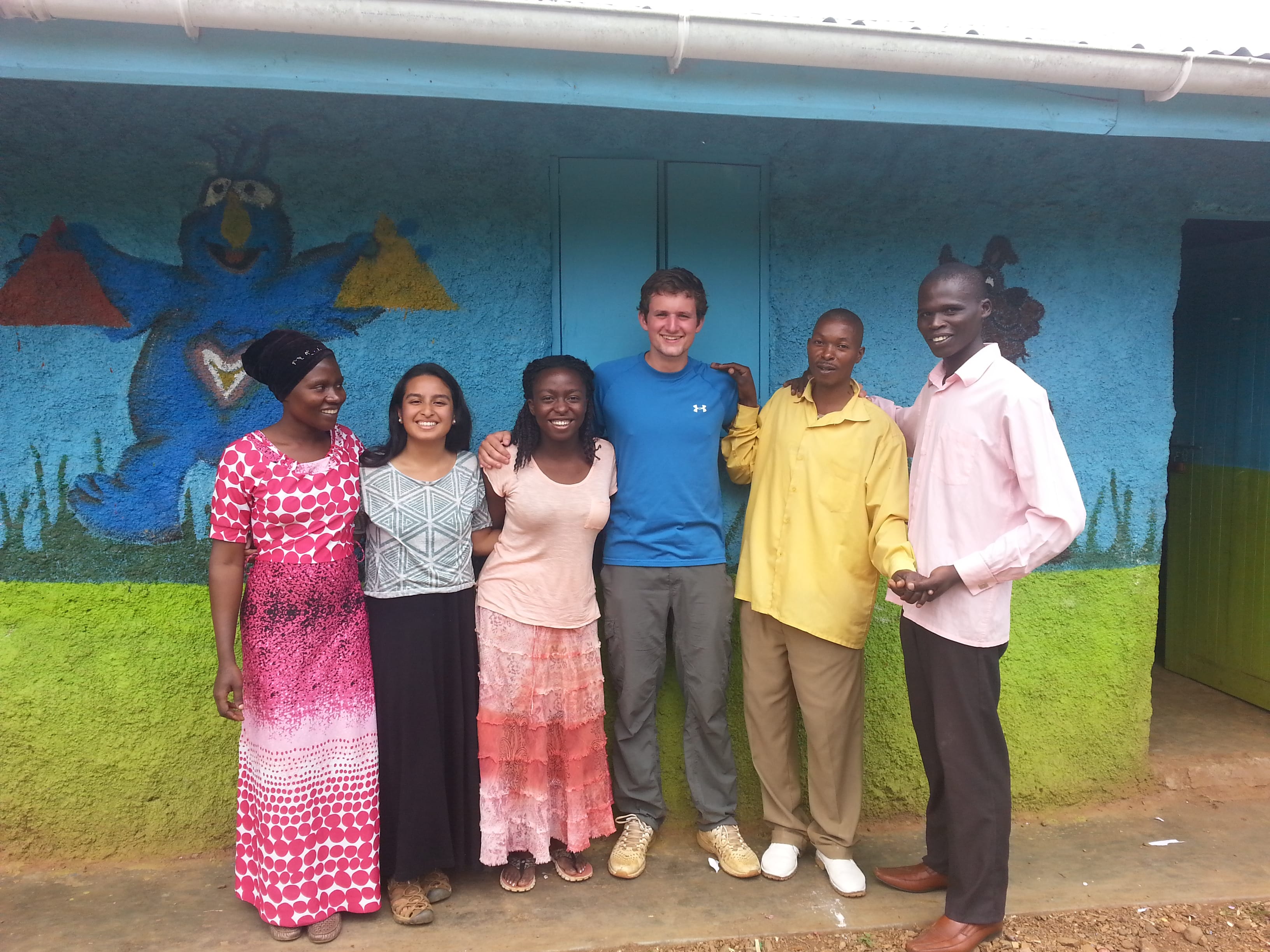
 had to do with over-hauling the school budget. The Lehigh student visited about a half dozen other primary schools in Bududa for comparison, and was able to develop relevant recommendations for PDI Education Center concerning staffing, staff payment structures, changes to the school fees, etc. The PDI board of directors already approved his recommendations, so I am sure that his work will have a lasting impact on the school for years to come.

 people get the life-saving interventions they need. Every time another “patient” rolls in, I explain to them that I am not a doctor, but that I would be happy to transport them to the private clinic (and pay for their treatments). So far this year, the students and I have helped over a dozen people (mostly children) get to the private clinic on the other side of the district. There are no clinics in our village of Bubiita, and the nearest clinic is run by the government and faces “stock outs” of medicines for 3 weeks out of every month. So most don’t waste their time walking 2 miles to a public clinic without medicines and instead seek out our assistance, when they can, to get them to the private clinic.